Martyn’s Law for Schools, Colleges and Universities: Is Your Communication Ready?
If your education setting needed to respond to a serious incident, how quickly could the right people receive clear instructions? From reception...


Call Us
For decades, traditional two-way radios have been the gold standard for instant communication in fast-paced and safety-critical environments From security teams and facilities management providers to retailers, schools and hospitality venues, radio communications have played a vital role in keeping teams connected, improving response times and supporting safer operations.
But the way organisations operate is changing.
Teams are becoming more mobile. Workforces are spread across multiple sites. Operations increasingly extend beyond a single building, campus or town centre. And as this shift continues, many organisations are beginning to ask a new question:
Are traditional radio systems enough on their own?
The answer depends on where and how your teams work.
Traditional two-way radios remain incredibly effective for many environments. They offer reliable, instant communication with minimal delay and are often the preferred solution for on-site operations.
However, they do come with limitations.
Coverage typically depends on radio infrastructure such as repeaters, base stations, or local networks. Once users move beyond that coverage area, communication can become unreliable or unavailable. For organisations managing multiple teams, mobile workers or multi-site operations, this can create challenges.
Examples include:
Security officers patrolling across multiple locations
Facilities management teams working across regional estates
Lone workers operating remotely
Retail and logistics teams moving between branches
Mobile maintenance or service engineers travelling nationwide
Communication coverage becomes just as important as communication speed, especially in these environments. That’s where cellular radio technology comes in.
A cellular two-way radio combines the simplicity of traditional radio with the extended coverage of modern cellular networks.
Rather than relying solely on local radio infrastructure, these devices use 4G, LTE and Wi-Fi connectivity to deliver push-to-talk (PTT) communication over wide geographic areas.
In practical terms, this means users can communicate instantly at the press of a button — just like with a standard radio — but without being restricted to a local coverage zone.
This creates a powerful new option for businesses that need dependable communications across towns, cities or nationwide operations.
We are seeing increasing demand for cellular communication solutions across multiple industries.
Why? Because they solve several operational challenges at once.
One of the biggest advantages of cellular radios is the removal of traditional infrastructure requirements.
There is no need to install repeaters or maintain complex radio networks for wide-area coverage. This reduces setup complexity and can lower ongoing maintenance costs.
Not every employee works from a fixed location.
Mobile teams need communications that move with them. Cellular radios allow drivers, engineers, security officers and remote workers to remain connected wherever network coverage exists.
For employees working alone or in isolated environments, communication is often a critical safety tool.
Cellular radios can support lone-worker features such as:
Emergency alerts
GPS location tracking
Man-down functionality
Rapid escalation during incidents
This helps organisations respond faster when support is needed.
As businesses grow, communication systems need to scale with them.
Cellular solutions make it easier to add users across new locations without major infrastructure expansion.
That flexibility is increasingly valuable for organisations managing multiple sites or growing national operations.
One of the biggest misconceptions is that cellular radios will entirely replace traditional radio systems.
In reality, we see the future as hybrid communications.
For many organisations, the best solution combines both technologies.
Traditional radio still offers major advantages for:
On-site resilience
Instant local communications
High-density environments
Areas where independent radio infrastructure is preferred
Cellular radios bring strengths in:
Mobility
Wide-area coverage
Multi-site operations
Remote workforce connectivity
Rather than choosing one over the other, many organisations benefit from using both.
The question is no longer radio or cellular?
It’s increasingly becoming:
How do we build the right communications ecosystem for our teams?
At Apex Radio Systems, we help organisations evaluate the right communication technologies for their operational needs.
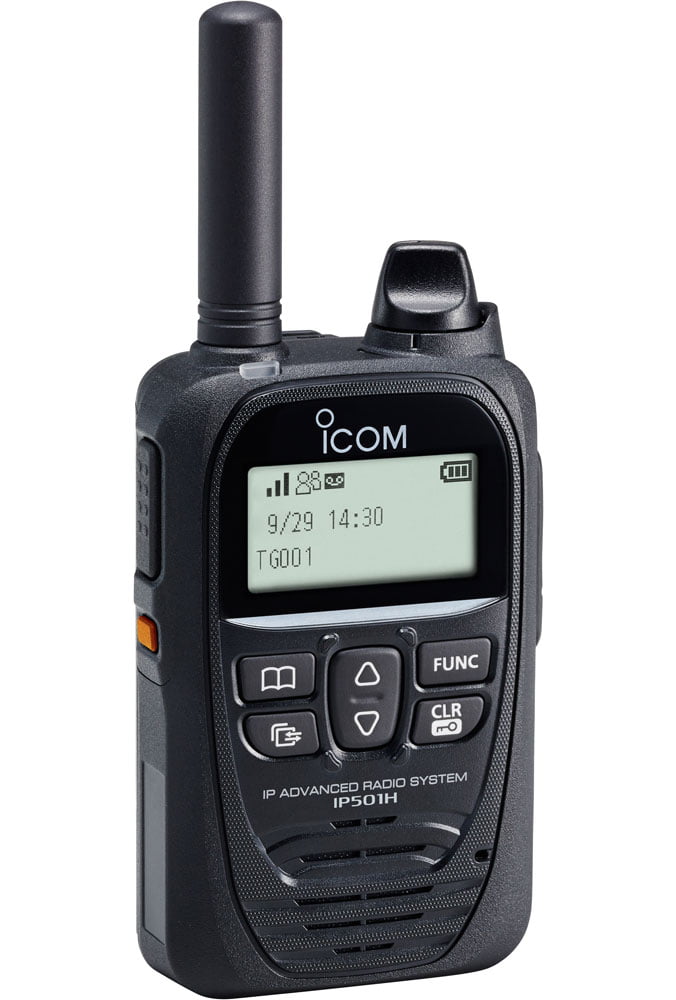
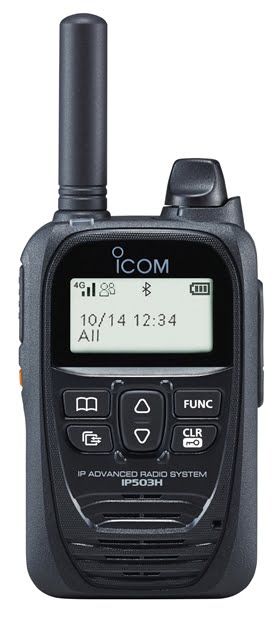
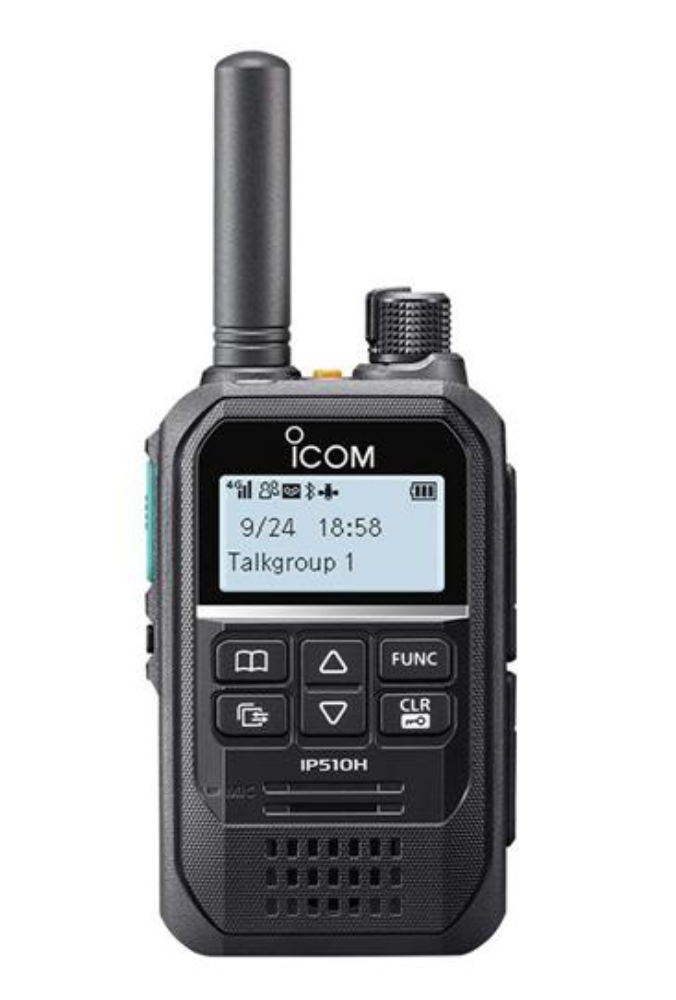
One solution generating strong interest is the Icom cellular radio range, including the Icom IP503H.
The Icom IP503H is designed for professional users who need reliable wide-area communications with the familiar simplicity of a radio handset.
Key features include:
Instant push-to-talk over LTE and Wi-Fi
Nationwide communication capability
Clear, loud audio in challenging environments
GPS location functionality
Emergency and lone-worker features
Simple, intuitive operation
The result is a communication solution that helps bridge the gap between traditional radio and modern connected working.
Every organisation is different.
The right communication solution depends on factors such as:
Workforce mobility
Site geography
Safety requirements
Existing infrastructure
Growth plans
That’s why selecting communications technology should start with operational needs — not just product specifications.
At Apex Radio Systems, we work with organisations across security, facilities management, education, retail and hospitality to design communication systems that improve safety, efficiency and response.
As critical communications continue to evolve, businesses that embrace flexible, connected solutions will be better equipped to support their teams.
Because when communication matters, coverage matters too.
If you’re considering how cellular communications could complement your existing radio system, the Apex team can help assess the best approach for your operation.
Get in touch to learn more about cellular two-way radios and the Icom range.
Apex Radio Systems
Two-way radio sales, hire, licensing and repairs for UK businesses since 1990. Motorola Platinum Dealer with offices in Gateshead, Teesside and Cardiff.
In this article
Speak to a specialist
Our team will talk through your site and recommend the right radios, cameras or scheme.
Share this article
Keep reading
If your education setting needed to respond to a serious incident, how quickly could the right people receive clear instructions? From reception...
Four national campaigns. One united message. Safer businesses and stronger communities. From 9–15 November 2026, the retail sector, policing and community safety...
Apex Radio Systems is preparing to exhibit at the British BIDs National Conference 2026. We’re exploring how better communication, intelligence and partnership...
Get a free quote
Whether you need a handful of radios or a site-wide system, our team will come back to you with clear, no-obligation advice.
Call us, Monday to Friday, 09:00 to 17:00

On all orders over £200 (for web orders only)

Help with product sales & support

Certification: ISO 9001

Speak to your Support Hero