

Keeping Holiday Park Teams Connected When It Matters
Learn about two-way radio for your site
Running a holiday park means keeping people, services and facilities working together across the site. The reception team welcomes guests, housekeeping prepares accommodation, maintenance responds to call-outs, and leisure, hospitality and security teams manage their own busy schedules.
For guests, these activities should come together as one seamless experience. Behind the scenes, that depends on staff sharing information and reaching the right colleague when something needs attention.
Effective holiday park communication helps teams coordinate everyday tasks and ask for support when circumstances change. From a routine maintenance request to a guest needing urgent assistance, a reliable way to stay connected can make a difference.
At Apex Radio Systems, we supply and hire two-way radios, body-worn cameras, and cellular communication solutions. We help operators explore equipment suited to their site, staff roles and operational requirements.
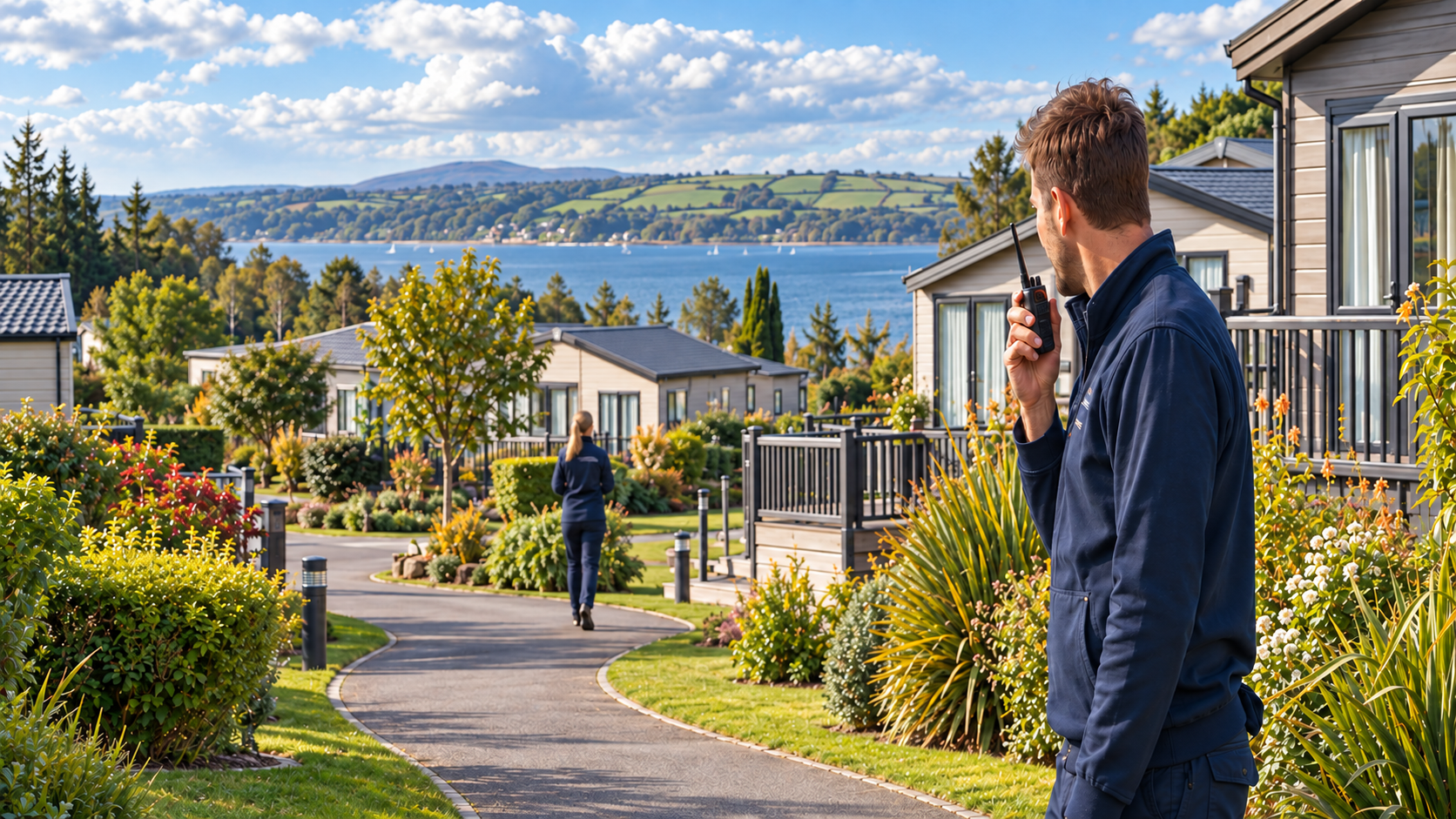
Image: Holiday park staff member using a two-way radio.
Why holiday park communication matters
A holiday park can have several departments working across a large outdoor area, often with staff moving between buildings, accommodation and facilities throughout their shift.
When communication is difficult, even a straightforward request can involve repeated phone calls or unnecessary journeys back to reception. A message may reach one colleague but miss someone else who needs to know.
Consider three familiar situations:
- Reception needs an update on whether accommodation is ready for arriving guests.
- Housekeeping discovers a fault and needs maintenance to attend.
- A team member working away from the main buildings needs assistance.
A suitable communication system gives staff a direct way to share updates, coordinate a response and confirm that a task has been completed.
Connect reception, housekeeping and maintenance
Our customers have highlighted that operational challenges begin with ordinary requests. A guest reports a faulty appliance, a cleaner finds an issue in a lodge, or reception needs someone to check a facility.
Two-way radios allow staff to share short messages without dialling individual colleagues. Where appropriate, group calls can keep the relevant team informed at the same time.
This helps departments coordinate work while remaining in their own areas. Reception can request assistance from the desk, housekeeping can report a problem while moving between accommodations, and maintenance can provide an update from the location.
Clear communication also supports handovers. Staff can acknowledge a request, confirm who is responding and let colleagues know when the work is finished.
Guests may never see the communication system, but they experience the service it helps your teams deliver.
Choose equipment around your park
Every park has different requirements. A compact touring site will have different communication needs from a large resort with restaurants, entertainment venues, leisure facilities and extensive grounds.
Before selecting equipment, consider:
- Which departments need to communicate with one another.
- Where staff work, including quieter or more isolated areas.
- Whether buildings or terrain affect coverage.
- How long equipment needs to operate between charges.
- Whether seasonal staff or events increase demand.
- Whether future expansion could change your requirements.
The right solution should fit your working practices and be straightforward for staff to use confidently throughout their shift.
Check radio coverage across the site
A radio that works well beside reception may perform differently inside a service building, behind accommodation or at the edge of the grounds.
Check coverage where your staff actually work. These may include lodges, touring areas, leisure facilities, plant rooms, maintenance workshops and outdoor spaces.
Depending on the site, a solution may involve conventional two-way radios, a repeater system or cellular push-to-talk technology. Cellular solutions rely on suitable network connectivity, while radio systems need to be assessed against the environment in which they will operate.
Practical testing helps identify coverage gaps and establish whether existing equipment remains suitable.
It is also worth reviewing accessories. Earpieces, headsets, carrying options and charging arrangements can make equipment more practical for different roles.
Help staff reach support when it matters
Alongside everyday operations, teams need a clear way to ask for help during an unexpected situation.
A guest may become unwell, a staff member may encounter aggressive behaviour, or an incident may require several departments to coordinate a response.
Staff should know how to contact the right people and clearly communicate their location. Some radio systems offer emergency alerts and lone-worker functions, depending on the equipment and configuration.
These features should support your park’s established procedures. Staff need to understand who receives an alert, what happens next and how to respond.
Reviewing communication is therefore an opportunity to consider both the technology and the working practices that support it.
Consider body-worn cameras for relevant roles
For staff who manage challenging interactions, body-worn cameras may form part of a wider approach to staff safety and incident management.
When deployed appropriately, they can provide a record of an interaction. Their suitability will depend on the responsibilities of the team and the situations they encounter.
Operators should consider who will use the cameras, when recording is appropriate and how footage will be managed. Clear policies, staff training and suitable privacy, access and retention arrangements are essential.
Body-worn cameras should complement communication systems and incident procedures, helping staff follow a consistent approach.
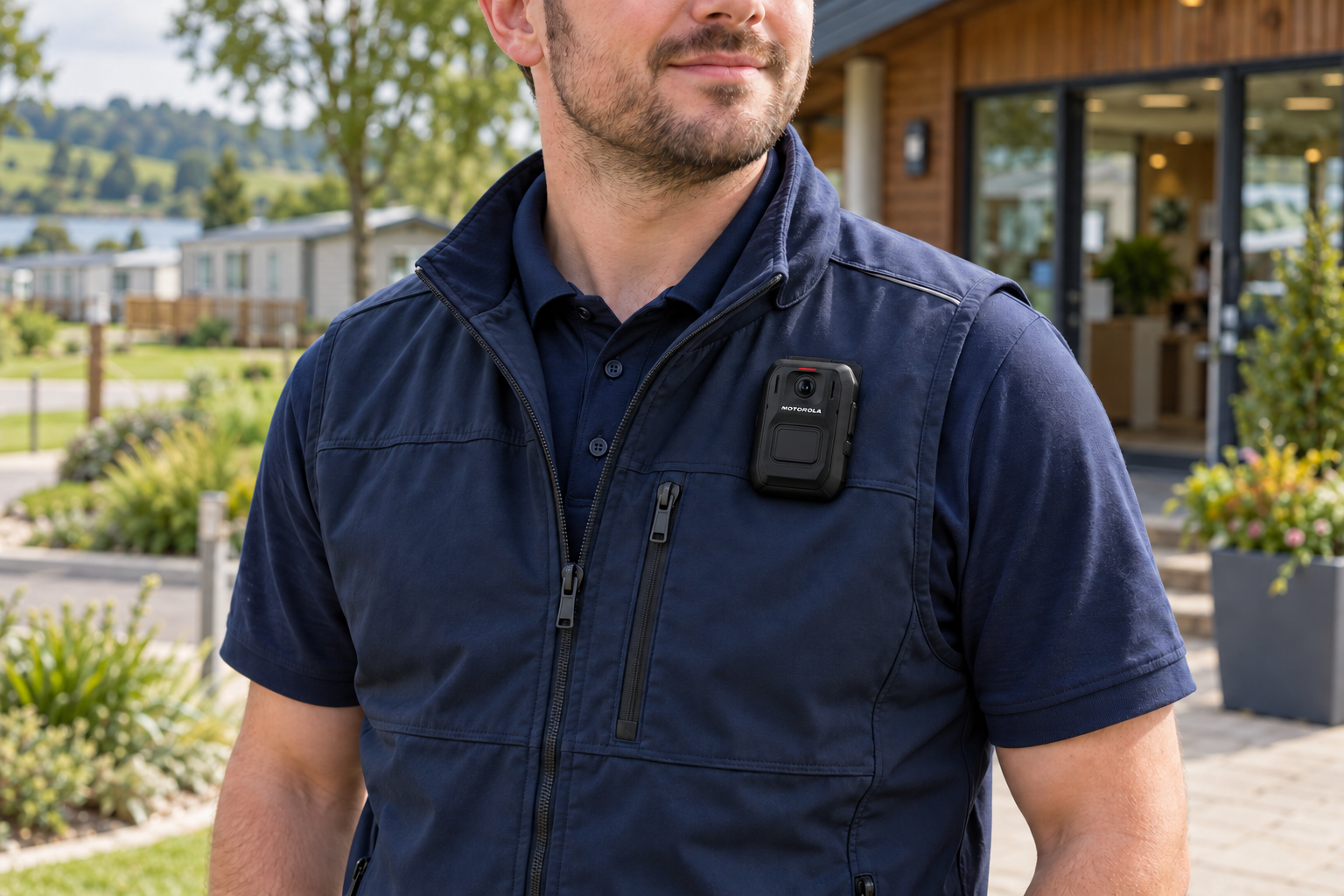
Body-worn camera for holiday park staff responsible for incident management.
Plan for seasonal demand
Holiday park staffing and activity can change significantly throughout the year. Peak periods, entertainment programmes and special events may create a temporary need for additional equipment.
Purchasing can suit established, ongoing requirements. Hire can help support seasonal teams or specific periods of increased activity.
Planning ahead lets operators consider equipment availability, charging, accessories, and staff familiarisation before the busiest weeks arrive.
It also provides an opportunity to check existing radios and replace damaged accessories, helping equipment remain dependable when demand increases.
Talk to Apex about your holiday park
A successful communication system needs to work for the people carrying it. Coverage, ease of use, battery requirements and suitable accessories all influence how well it supports your operation.
Apex Radio Systems supplies and hires two-way radios, body-worn cameras and cellular communication solutions. Our team can help you explore options around your site, staff roles and operational priorities.
Whether you are reviewing an existing system, addressing coverage gaps or planning additional equipment for your busy season, start with the places where communication currently slows work down.
Contact Apex Radio Systems to discuss communication solutions for your holiday park. Alternatively, follow us on LinkedIn to learn more and keep up to date with insights and offers.


