

Why Mobile Phones Aren’t Always Enough for Education Teams
Two-Way Radios are the alternative solution
Schools, colleges and universities are busy environments where good communication plays an important role in keeping people safe and operations running smoothly.
A safeguarding concern develops. A member of staff needs assistance. A site team is responding to an urgent maintenance issue. Reception needs to reach a colleague elsewhere in the building. Or hundreds of pupils, students, parents and visitors are arriving for an event.
In those moments, being able to reach the right people quickly matters.
Mobile phones are an essential part of modern working life, but for education teams that need fast, simple and reliable communication across a site, they aren’t always the most practical tool.
So, what role can professional communication systems play in creating safer, better-connected education environments?
When every second matters
Consider a member of staff who suddenly needs assistance.
With a mobile phone, they may need to unlock the device, find the correct contact, make the call and wait for someone to answer. If several colleagues need to know what’s happening, further calls or messages may be required.
Professional two-way radios are designed differently.
At the press of a button, a user can communicate instantly with an individual or group of colleagues.
For education teams, that immediacy can make communication much simpler when responding to an incident, coordinating staff or requesting additional support.
One message. The right people. Straight away.
Education environments rarely operate as a collection of individuals.
Reception may need to reach the site team. A safeguarding lead may need support from a senior colleague. Facilities staff can be spread across buildings and grounds. Security teams may need to coordinate a response across a larger college or university site.
During events such as open days, sports days, parents’ evenings and graduations, even more people may need to stay connected.
Traditional phone calls are primarily one-to-one.
Two-way radio enables one-to-many communication, allowing the same information to be shared with the relevant team at the same time.
That can help staff coordinate more effectively without relying on multiple calls, messages or trying to locate colleagues in person.
Communication beyond the classroom
While teachers and lecturers are at the heart of education, a huge number of people work behind the scenes to keep education sites operating safely and effectively.
Professional communication systems can support:
Site & Facilities Teams
Coordinating maintenance, responding to faults and communicating across buildings, grounds and plant areas.
Safeguarding & Senior Teams
Providing a quick method of communication when support or an immediate response is required.
Reception & Administration
Helping front-of-house employees contact colleagues elsewhere on site without leaving their position.
Security Teams
Supporting communication when managing visitors, responding to incidents and monitoring larger sites.
Lone & Out-of-Hours Workers
Helping employees remain connected when working alone, remotely or outside normal operating hours.
Events & Operations
Connecting teams during open days, sports days, graduations, parents’ evenings and other busy events.
The technology should ultimately fit around how your people work, rather than making your people work around the technology.
What happens when mobile coverage isn’t reliable?
Communication becomes more complicated when sites include multiple buildings, older construction, basements, plant rooms, sports facilities, outdoor spaces or separate locations.
Mobile and Wi-Fi coverage may not always be consistent everywhere employees need to work.
And simply purchasing more radios doesn’t necessarily solve that problem either.
An effective professional communication system should consider where people actually need to communicate.
A radio coverage assessment can help identify potential weak spots and determine whether additional infrastructure, such as repeaters, could improve connectivity.
For larger organisations operating across multiple sites, broadband push-to-talk technology can also use Wi-Fi and mobile networks to extend communication beyond the boundaries of a traditional radio system.
The objective isn’t simply to give employees another device.
It’s to make sure they can communicate where and when they need to.
Supporting lone and frontline staff
Communication also forms part of the wider conversation around employee safety.
Site teams may work alone in isolated parts of a building. Security staff can encounter challenging situations. Reception and other public-facing employees may occasionally experience confrontation or aggression.
Professional radio systems can offer features designed to provide additional support, including dedicated emergency buttons and lone-worker functionality.
This gives employees a straightforward way to raise an alert or request assistance when required.
Could body-worn video provide additional protection?
For some education environments and roles, body-worn cameras can provide another layer of support.
Body-worn video can help organisations protect public-facing and security employees by providing an objective record of an incident and may also help deter aggressive or unacceptable behaviour.
When combined with reliable communication, the technologies can form part of a more joined-up approach to staff safety.
An employee can quickly request assistance while body-worn video provides a record of the situation as it develops.
As with any technology involving video and personal data, its introduction should be supported by appropriate policies, procedures and data protection considerations.
Mobile phones still have an important role
The question isn’t whether education organisations should stop using mobile phones.
Of course not.
Smartphones, radios, body-worn cameras and other communication platforms all perform different roles.
For emails, applications, longer conversations and everyday business communication, smartphones are invaluable.
But when someone needs to communicate immediately with multiple colleagues at once, professional push-to-talk communication offers capabilities that a standard phone call wasn’t designed to provide.
It’s about choosing the right communication tool for the situation.
Is your current communication system still right for your organisation?
Communication requirements change over time.
Teams grow. Buildings change. Schools join Multi-Academy Trusts. Campuses expand. Existing radio fleets age. Contracts approach renewal. And expectations around safeguarding and staff safety continue to evolve.
That’s why it’s worth periodically reviewing how your teams currently communicate.
Ask yourself:
- Can staff communicate everywhere they need to across our site?
- Can someone request assistance quickly if they need support?
- Can we communicate with multiple team members at the same time?
- Are there areas where radio, mobile or Wi-Fi coverage is unreliable?
- Is our existing equipment still appropriate for how our teams operate today?
- Do lone or public-facing employees have the right communication and safety tools available to them?
- Could body-worn video provide additional support for particular teams or situations?
If the answer to any of those questions is unclear, it may be worth reviewing your current provision.
Helping education teams stay connected
With more than 35 years’ experience in professional communications, Apex Radio Systems supports schools, academies, colleges and universities with communication and safety solutions designed around their individual requirements.
Our solutions include:
- Professional two-way radio systems
- Body-worn cameras
- Radio coverage and infrastructure
- Lone-worker communication solutions
- Broadband push-to-talk
- Short and long-term radio hire
- Maintenance and ongoing support
Rather than starting with a particular product, we can work with your team to understand how your people currently communicate, where the challenges exist and what you’re looking to improve.
Whether you’re reviewing an existing radio system, considering body-worn video, planning a future procurement exercise or simply exploring what’s possible, we’re here to help.
How connected are your teams?
If you’re responsible for communication, safety, safeguarding, facilities or operations within a school, college or university, now could be a good time to review whether your current communication system is still meeting your needs.
Follow us on LinkedIn for more details and insightful content.
Learn more about Motorola Radios suitable for you:

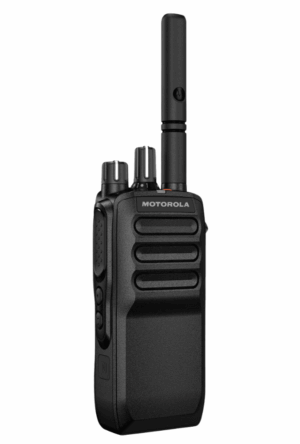
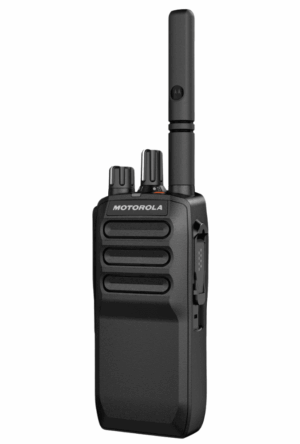
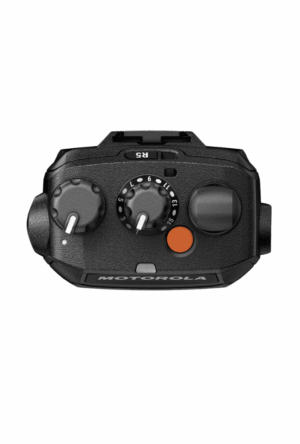
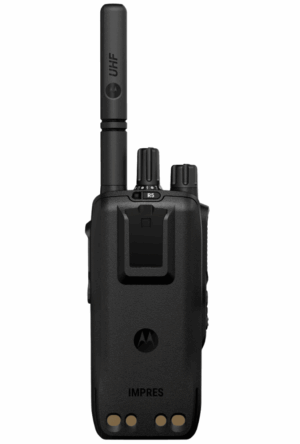
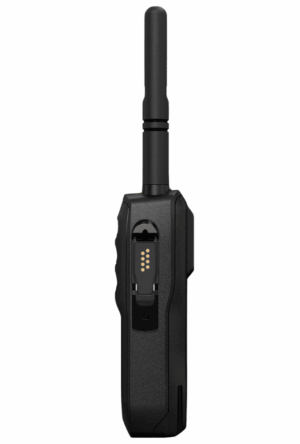
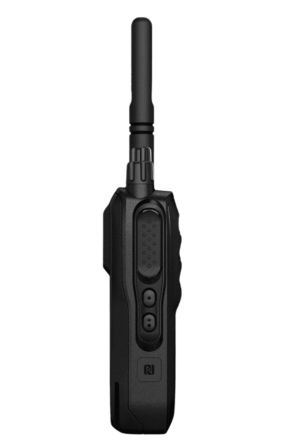
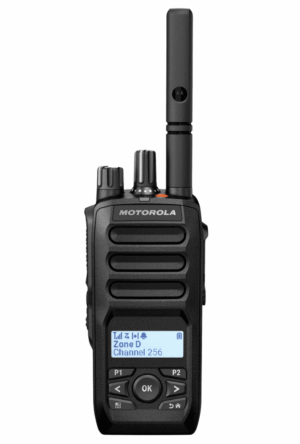
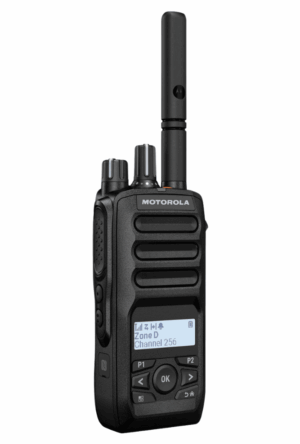
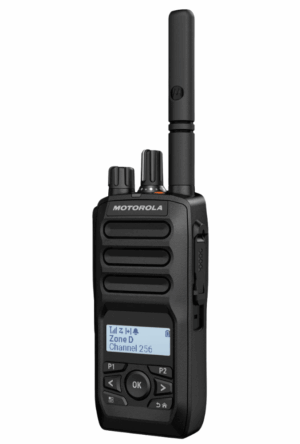


Motorola R5 Licenced Two-Way Radio
The Morotola R5 is available to order now; contact us on 0191 228 0466 or email us at marketing@apexradio.com to get a quote.
The new Motorola R5 handportable connects teams, boosting efficiency and safety with loud, clear audio that cuts through background noise and intuitive status indications and controls so workers can focus on their tasks. The R5 is a tough, compact device that’s built to last.

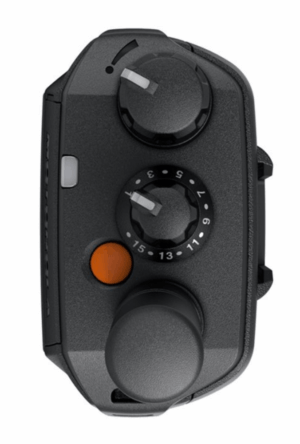
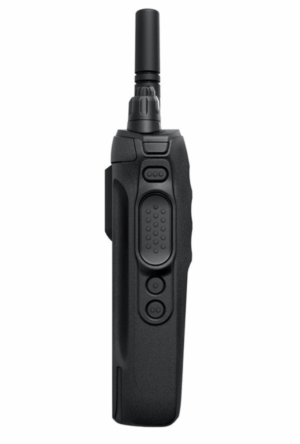
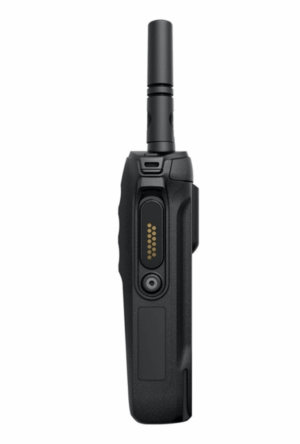
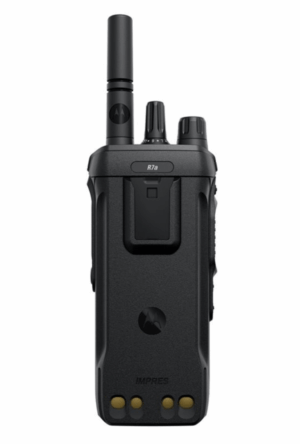
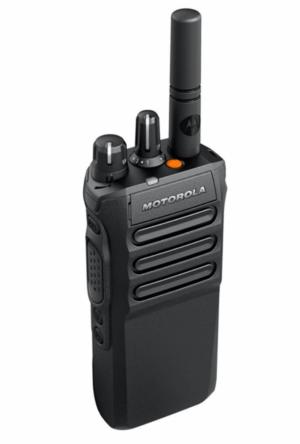
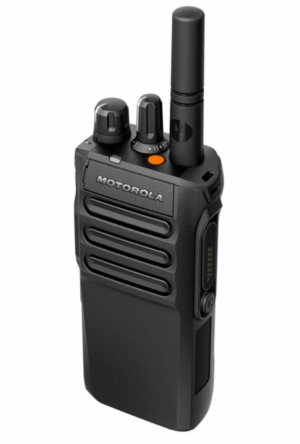


Motorola R7A Two-Way Radio
The Motorola R7A is a non-keypad digital portable radio that offers loud, clear and customisable audio, in a rugged, dependable and connected device.


